Communication Techniques

In modern web applications, real-time communication plays a major role in delivering fast and interactive user experiences. Communication techniques define how clients and servers exchange data over the internet. Depending on the application requirements, developers choose different methods such as Short Polling, Long Polling, WebSockets, Server-Sent Events (SSE), and Webhooks.
Each technique has its own advantages, limitations, and use cases. For example, polling techniques are simple to implement, while WebSockets provide full-duplex real-time communication for chat apps, gaming platforms, and live notifications. SSE is useful for one-way live updates, and Webhooks help systems communicate automatically between different services.
In this article, we will explore these communication techniques, understand how they work, compare their performance, and learn where each approach is best suited in modern system design.
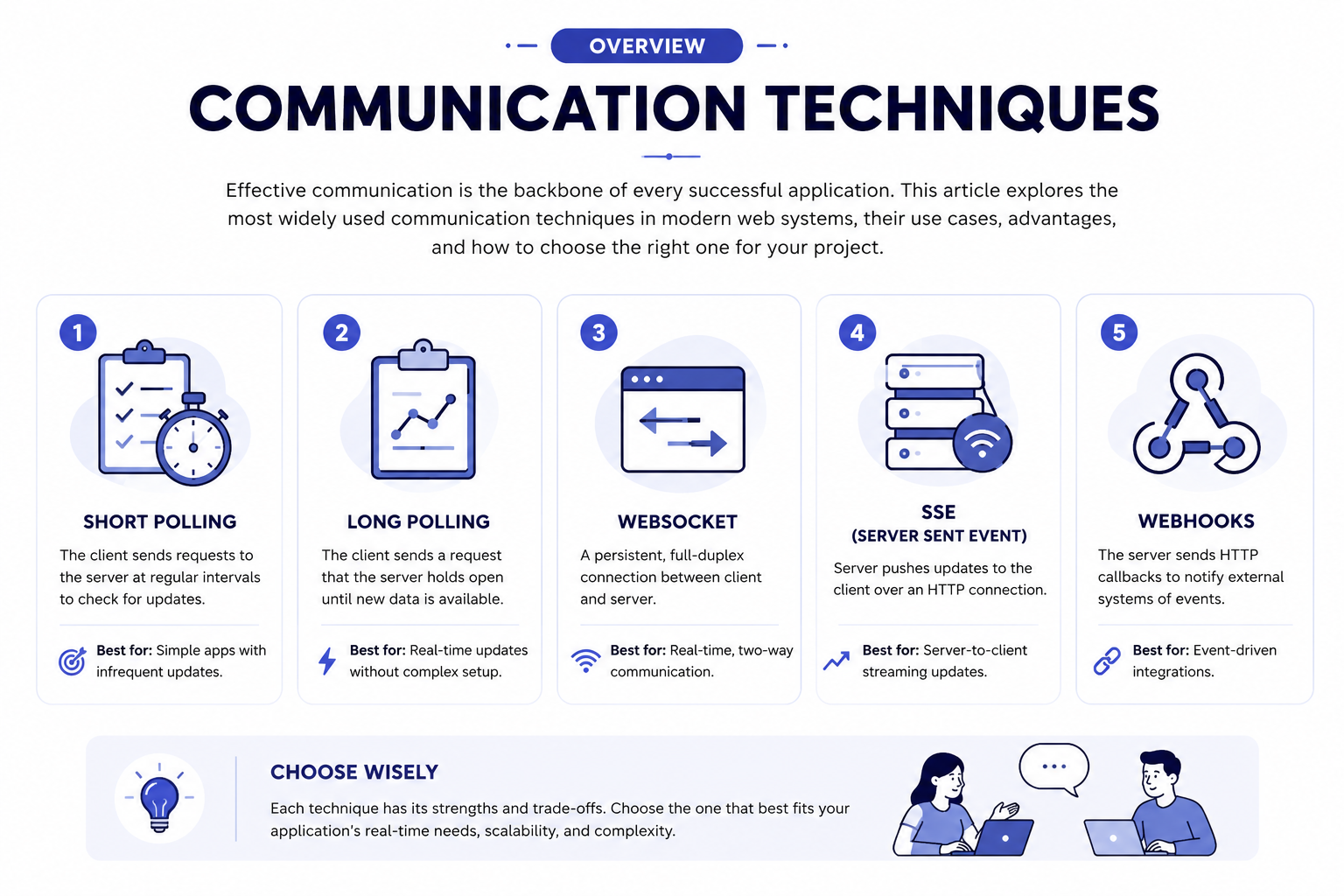
Classification: Communication techniques can be classified into different methods such as Short Polling, Long Polling, WebSockets, Server-Sent Events (SSE), and Webhooks based on how clients and servers exchange data in real-time applications.
(1) Short Polling :-
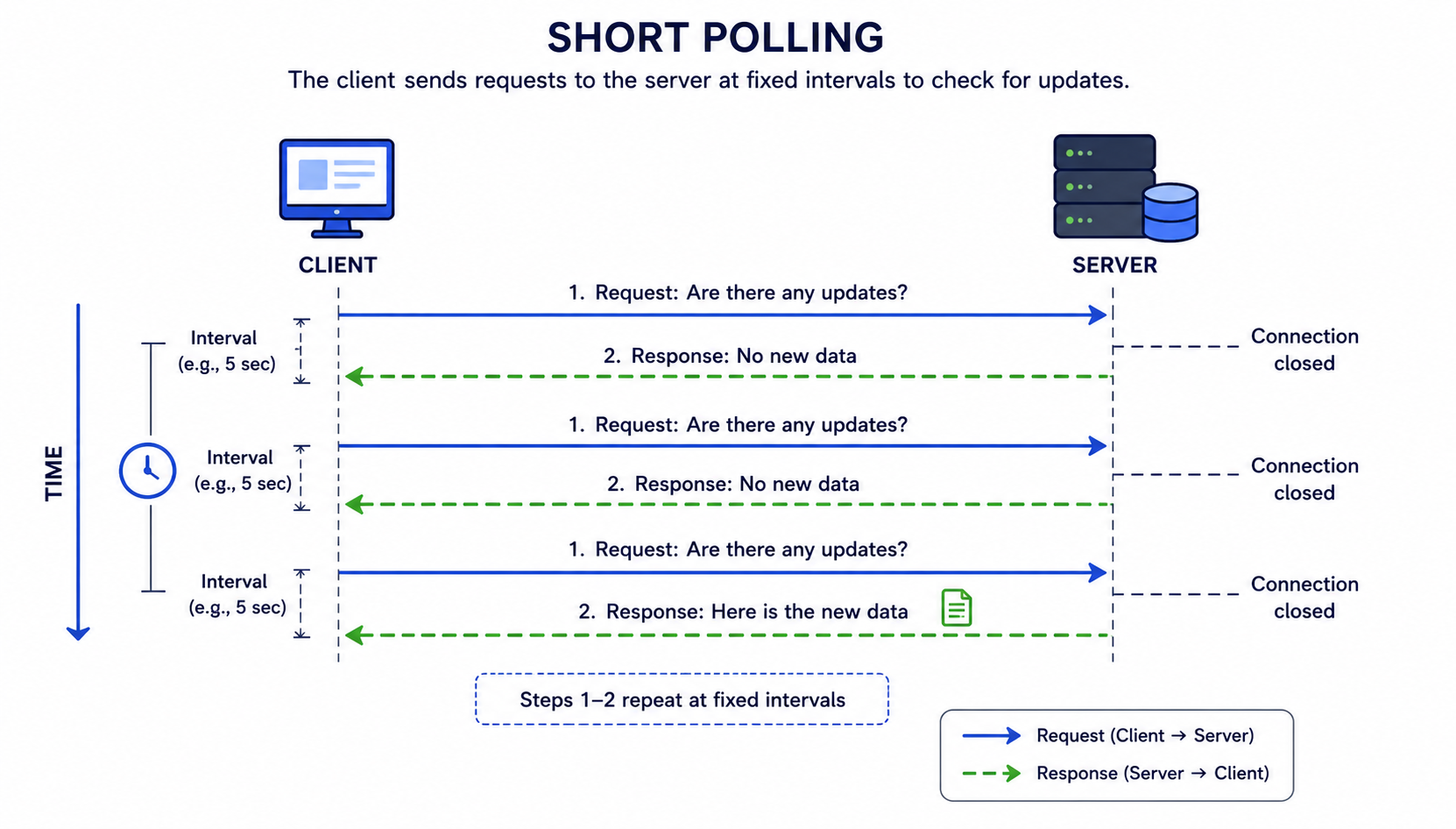
Short Polling is a communication technique where the client sends requests to the server at regular intervals to check whether new data or updates are available. The server immediately responds with the latest data, and the connection is closed after each request-response cycle.
These are particularly useful for:
Real-Time Dashboards
Chat Applications
Stock Price Updates
Notification Systems
Diagram:-
(2) Long Polling :-
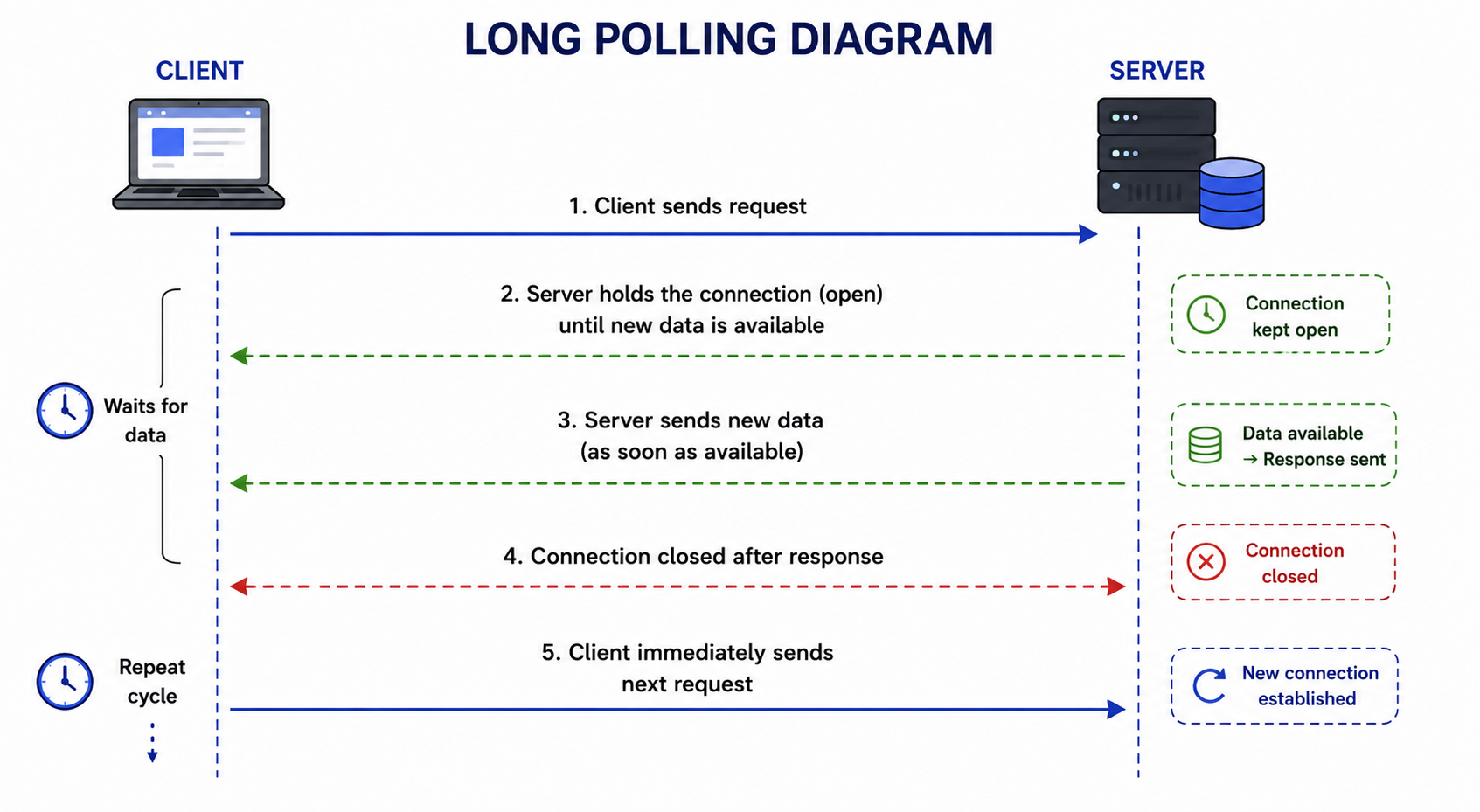
Long Polling is a communication technique where the client sends a request to the server, and the server keeps the connection open until new data becomes available. Once the server sends the response, the client immediately creates another request to continue receiving updates. This method reduces unnecessary repeated requests and provides a near real-time communication experience.
Diagram:-
These are particularly useful for:
Chat Applications
Live Notifications
Real-Time Collaboration Tools
Live Tracking Systems
Short Polling Vs Long Polling:-
| Feature | Short Polling | Long Polling |
|---|---|---|
| Request Frequency | Sends requests at fixed intervals | Sends a new request only after response |
| Server Connection | Closed immediately after response | Kept open until data is available |
| Real-Time Performance | Less efficient for real-time updates | Better real-time experience |
| Network Usage | Higher due to repeated requests | Lower compared to short polling |
| Latency | Higher delay in receiving updates | Lower delay |
| Complexity | Simple to implement | Slightly more complex |
| Best Use Cases | Dashboards, periodic updates | Chat apps, live notifications |
(3) WebSocket :-
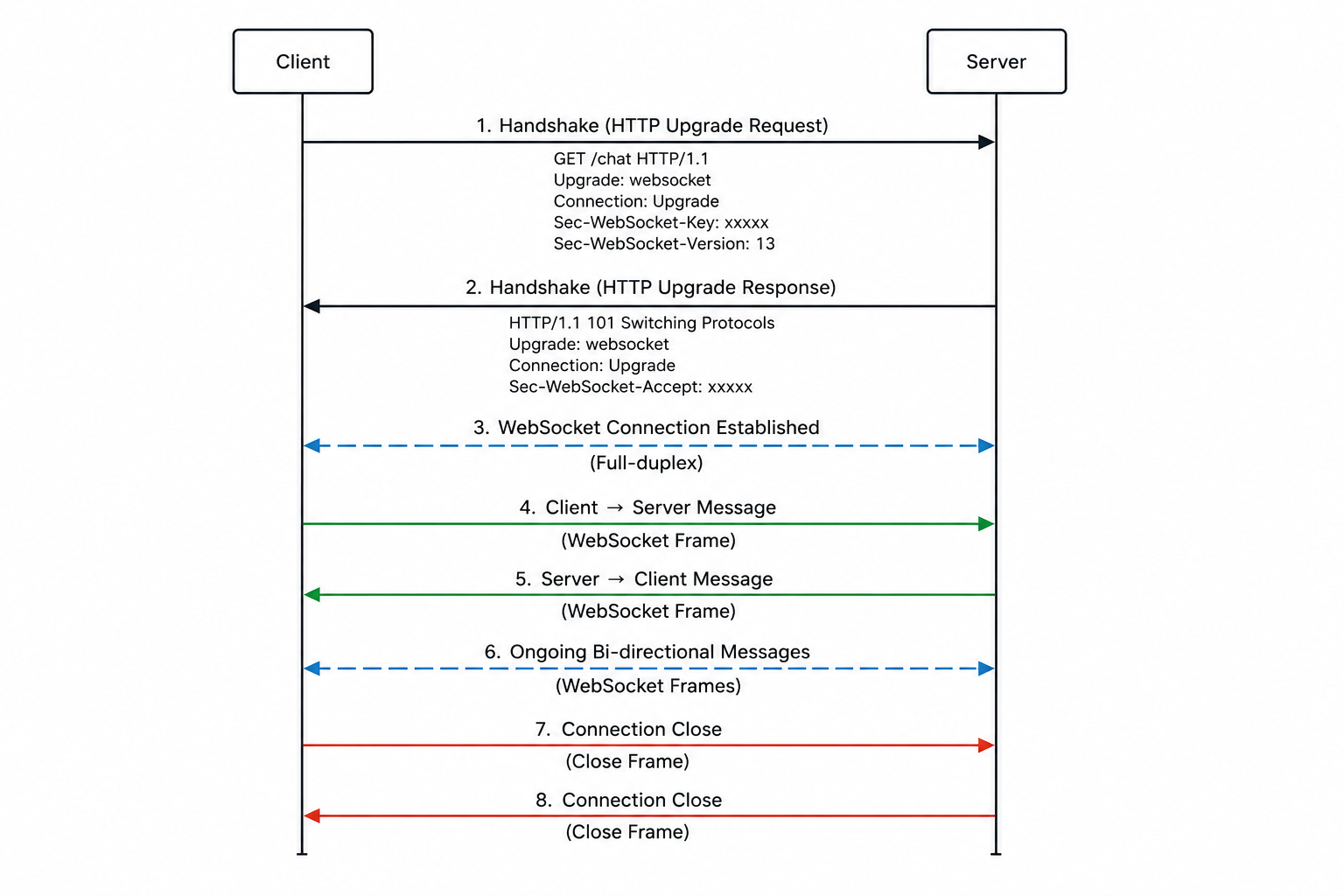
WebSocket is a full-duplex communication protocol that creates a persistent connection between the client and server. Once the connection is established, both the client and server can send and receive data continuously in real-time without repeatedly creating new HTTP requests.
Diagram:-
These are particularly useful for:
Chat Applications
Online Gaming
Live Notifications
Real-Time Collaboration Tools
Stock Market Applications
Video Streaming and Live Broadcasting
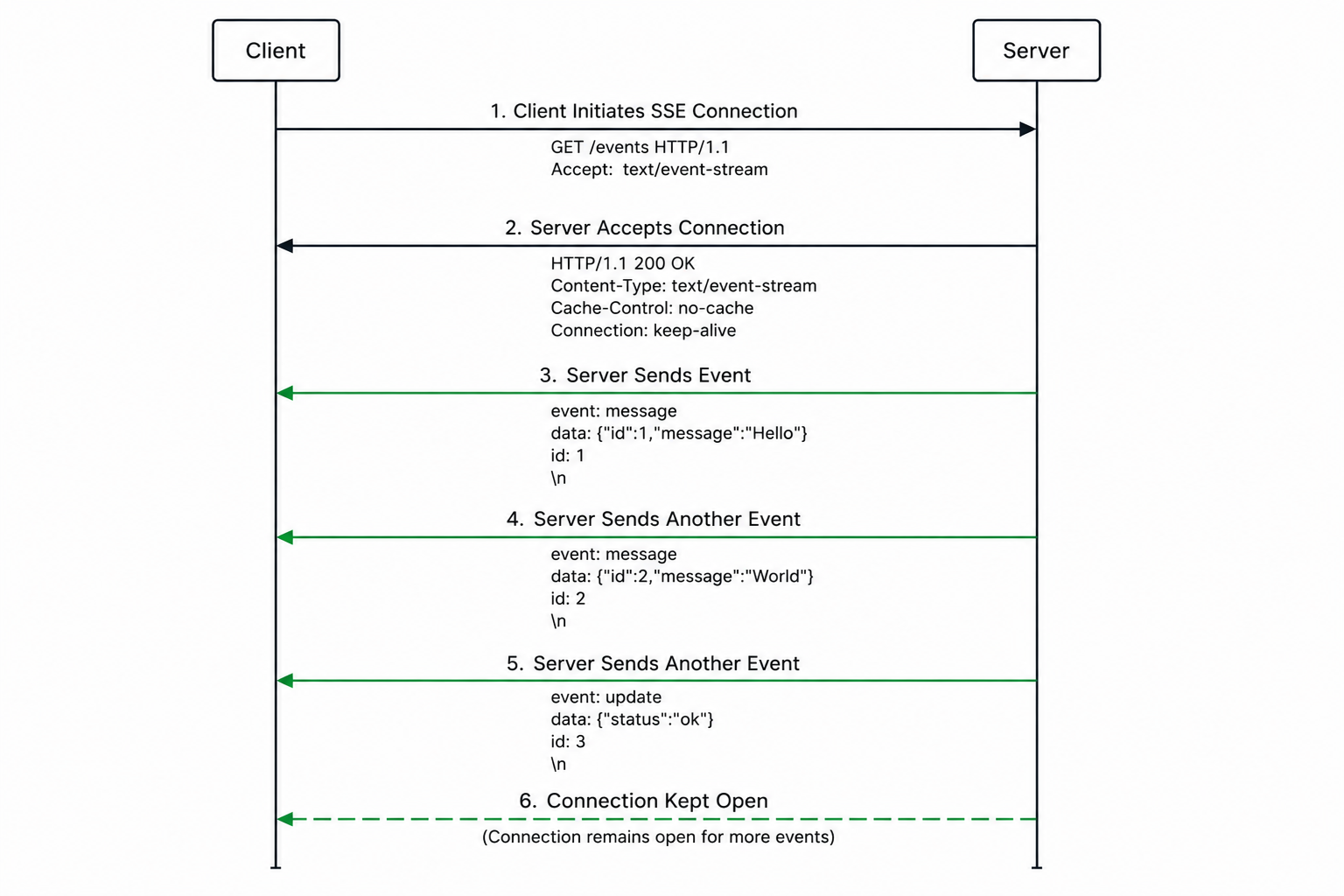
4) Server-Sent Events (SSE) :-
Server-Sent Events (SSE) is a one-way communication technique where the server continuously sends real-time updates to the client over a single HTTP connection. The client can receive data automatically without repeatedly sending requests to the server.
Diagram:-
These are particularly useful for:
Live News Feeds
Real-Time Notifications
Stock Market Updates
Weather Applications
Live Sports Scores
Social Media Feeds
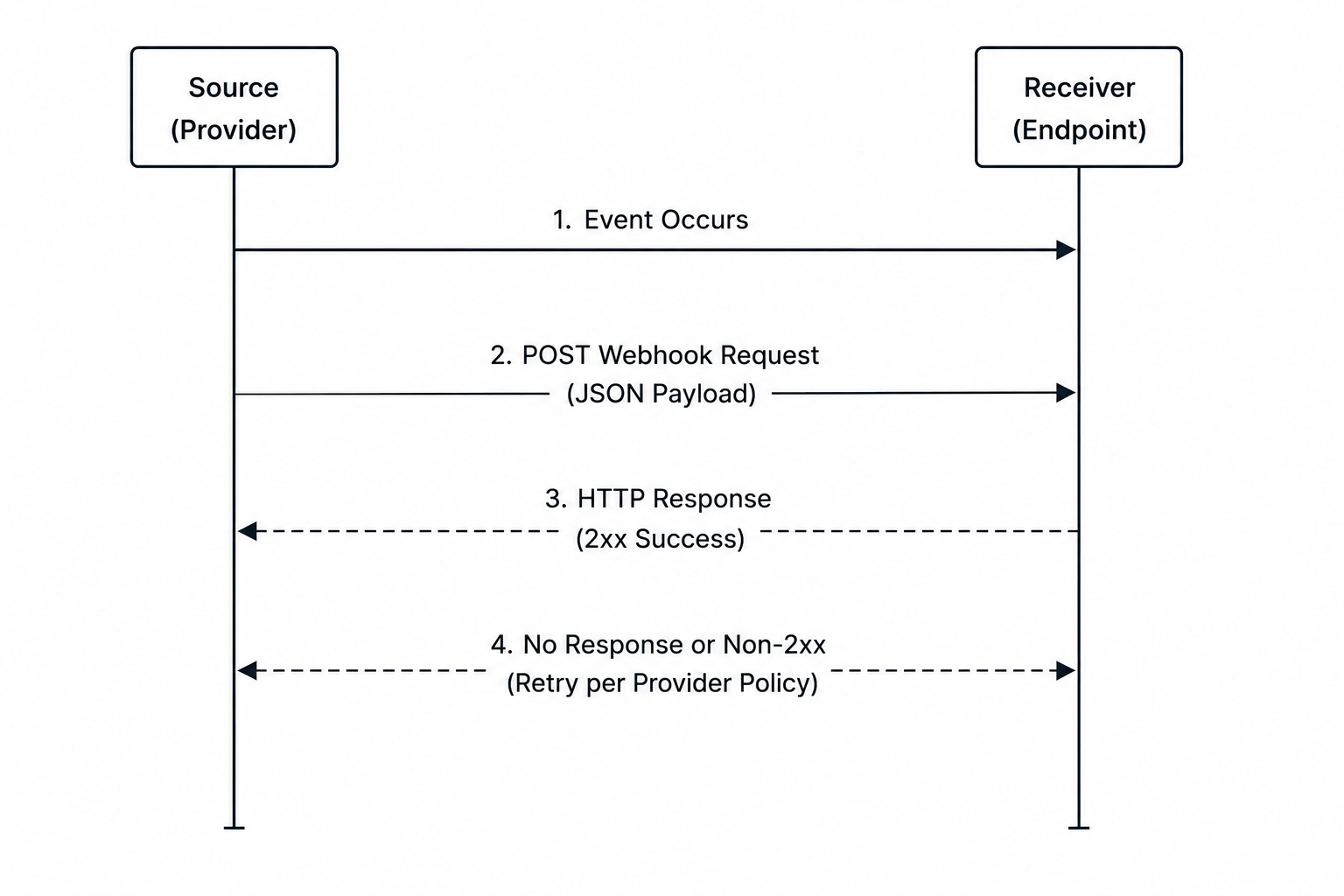
(5) Webhooks :-
Webhooks are a communication technique where one application automatically sends real-time data or event notifications to another application through an HTTP request whenever a specific event occurs.
Diagram:-
These are particularly useful for:
Payment Gateway Notifications
GitHub Event Integrations
Third-Party API Integrations
Automated Email Notifications
Order and Delivery Updates
CI/CD Pipeline Automation
Best Technique Based on Use Case
| Use Case | Best Technique |
|---|---|
| Simple Periodic Updates | Short Polling |
| Near Real-Time Applications | Long Polling |
| Real-Time Bidirectional Communication | WebSocket |
| One-Way Live Updates | SSE |
| Event-Driven Integrations | Webhooks |
Overall, WebSocket is considered the most powerful technique for real-time applications, while Webhooks are highly efficient for automation and third-party integrations.